
Most people want to save money but struggle to make it happen consistently — not because they earn too little, but because they have no clear system for allocating what they earn. Money without a plan disappears into daily spending without intention or direction. The 50/30/20 rule is one of personal finance’s most elegant solutions to this problem — a simple, three-category budgeting framework that tells your money exactly where to go every month without requiring complicated spreadsheets or financial expertise.
Originally popularised by US Senator and bankruptcy expert Elizabeth Warren in her book All Your Worth, the 50/30/20 rule has been adopted by millions worldwide as the foundational framework for managing personal finances. It works equally well for salaried employees, freelancers, and business owners — and it works in India just as powerfully as anywhere else.
What the 50/30/20 Rule Actually Means
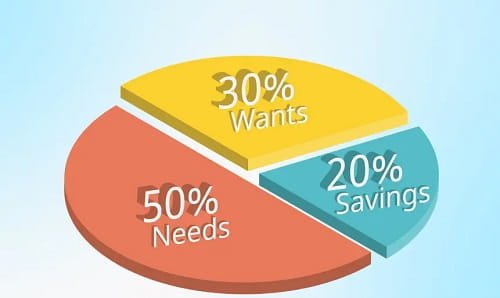
The rule divides your monthly after-tax income into three distinct buckets — each serving a specific financial purpose. Understanding what belongs in each bucket is the key to applying the rule correctly.
50% for Needs — This covers everything essential to your survival and basic functioning. Rent or home loan EMI, groceries, electricity and water bills, internet, mobile phone bill, public transport or fuel for commuting, insurance premiums, school fees for children, and minimum loan repayments all qualify as needs. These are expenses you genuinely cannot avoid without serious consequence. The test is simple — if not paying this would put your housing, health, or employment at risk, it is a need.
30% for Wants — Wants are spending choices that improve your quality of life but are not strictly necessary. Dining out and ordering food delivery, movie tickets and OTT subscriptions, clothing beyond basics, gym memberships, travel, gadgets, home décor, and entertainment all fall here. These are not bad expenses — they make life enjoyable and meaningful. The 30% allocation gives you permission to spend on pleasure without guilt, while keeping it within a defined boundary.
20% for Savings and Investments — This is the most important category — money paid to your future self before it can be spent on anything else. Emergency fund contributions, mutual fund SIPs, PPF deposits, FD investments, NPS contributions, and any other saving or investing vehicle belongs here. This category is non-negotiable. It is transferred or invested the moment your salary arrives, not saved from whatever happens to remain at month-end.
How to Apply the 50/30/20 Rule to Your Income
Step 1 — Establish your exact monthly take-home income after all tax deductions and PF contributions.
Step 2 — Calculate your three allocation amounts. If your take-home is ₹50,000, your allocations are ₹25,000 for needs, ₹15,000 for wants, and ₹10,000 for savings.
Step 3 — List all your current monthly expenses and categorise each as a need or want. This categorisation exercise is often revealing — many expenses we mentally categorise as needs are actually wants when evaluated honestly.
Step 4 — Compare your actual spending in each category against your allocation. If your needs currently consume 65% of income, you have a structural problem — rent is too high relative to income, or debt repayments are disproportionate — and reducing it requires structural solutions like a lower-cost accommodation or debt consolidation rather than willpower-based spending cuts.
Step 5 — Transfer your 20% savings allocation automatically on salary day before anything else is spent. This single habit — paying yourself first — is the entire foundation of the rule’s effectiveness.
Adjusting the Rule for Indian Realities
For many Indians living in metros like Mumbai, Bangalore, or Delhi, rent alone consumes 30–40% of income — making the 50% needs target challenging to achieve. In these situations, adjust the framework pragmatically. If needs genuinely require 60%, reduce wants to 20% and maintain savings at 20%. The non-negotiable element is keeping the savings category at a minimum of 15–20% — that is the wealth-building component that cannot be sacrificed for lifestyle spending.
Similarly, if you are in an aggressive debt-repayment phase, temporarily redirect the wants budget toward debt reduction until high-interest debt is cleared. The framework is a guide, not a rigid law — its power comes from the mindset of intentional, category-based allocation rather than the specific percentages.
Practical Tools for Implementing the Rule
Bank account separation — Open three accounts: one for needs, one for wants, and one for savings. Distribute each month’s salary allocation across the three accounts on the first day of the month. This physical separation makes overspending in any category visible immediately.
UPI and card controls — Many banks allow you to set monthly spending limits on specific cards or accounts. Setting a limit on your wants account prevents overspending even in moments of impulse.
Budgeting apps — Walnut, Money Manager, or even a simple Google Sheets template that you update weekly makes tracking actual versus allocated spending straightforward. The accountability of seeing the numbers prevents the gradual category creep that undermines most budgeting attempts.
The Compound Effect of Consistent Saving
The 20% savings rule’s greatest power becomes visible over time. A person earning ₹50,000 monthly who consistently saves and invests ₹10,000 per month in diversified mutual funds earning an average 12% annual return will accumulate approximately ₹1 crore in 20 years. That same person, without the budgeting framework, might save ₹2,000–₹3,000 inconsistently and accumulate a fraction of that amount. The 50/30/20 rule does not create wealth through sophistication — it creates wealth through consistency, and consistency is what the structured allocation makes possible.
Frequently Asked Questions (FAQs)
Q: What if my needs exceed 50% of my income?
A: Reduce wants proportionally to compensate. The savings allocation should be the last category to be reduced, not the first.
Q: Should EMI payments be counted as needs?
A: Yes — loan EMIs are financial obligations that cannot be skipped and belong in the needs category.
Q: Is 20% savings realistic on a low income?
A: Start with whatever percentage is possible — even 5–10%. The habit of saving before spending is more important initially than the specific percentage.
Q: Can I save more than 20%?
A: Absolutely — if your needs are below 50%, redirect the surplus to savings and investments rather than expanding wants spending.