
Black Dog remains one of the most widely sold blended Scotch whiskies in India. But if you’ve ever compared prices across cities, you already know one truth: the same bottle can feel “cheap” in Goa and painfully expensive in Bangalore or Mumbai.
That gap widened slightly in 2026.
After the Union Budget simplified Tax Collected at Source (TCS) on alcoholic liquor to a flat 2%, supply-chain costs rose for distributors and retailers. The result? A quiet 2–5% retail hike in many states compared to 2025. Add local excise duties on top, and prices now vary more than ever.
Also important: Black Dog sold in India comes from Diageo, so the whisky itself doesn’t change — only the taxes do.
First, know the “two Black Dogs”
Many buyers get confused because there are two common variants on Indian shelves:
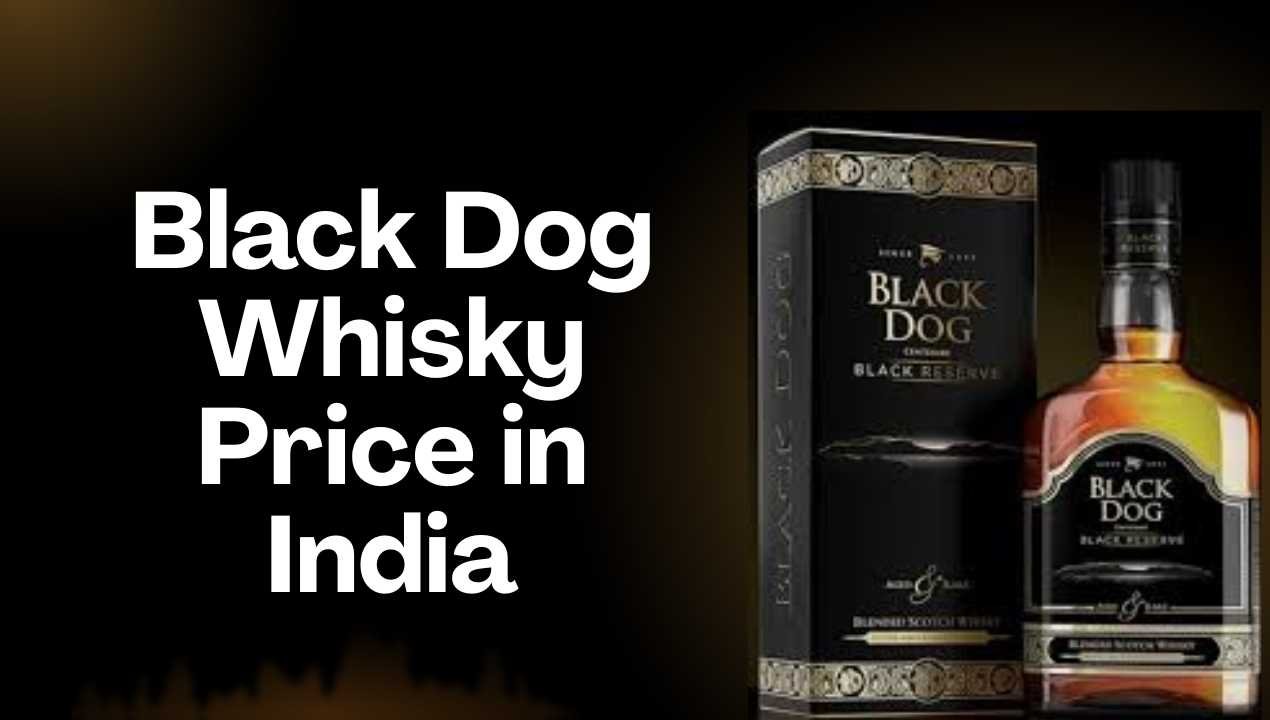
- Black Dog Centenary (Black Reserve) – the standard, entry-level version.
- Black Dog Triple Gold Reserve – a premium blend that usually costs ₹500–₹1,000 more for a 750 ml bottle.
All prices below refer to Black Dog Centenary, unless stated otherwise.
State-wise Black Dog prices (approx. early 2026)
(Indicative retail ranges. Actual shop prices may differ.)
| State / City | 180 ml (₹) | 375 ml (₹) | 750 ml (₹) |
| Delhi | 495 | 1,000 | 1,930–2,100 |
| Uttar Pradesh | 360 | 860 | ~1,720 |
| Mumbai | ~900 | ~1,945 | 2,800–3,200 |
| Jharkhand | 690 | 1,400 | ~2,700 |
| Assam | 440 | 860 | ~1,720 |
| Goa | 350 | 800 | 1,400–1,550 |
| Gurgaon (Haryana) | 495 | ~1,300 | 1,800–2,000 |
| Pune | ~900 | ~1,945 | 2,800–3,800 |
| Kerala | 600 | 1,200 | ~2,200 |
| Hyderabad | 500 | 1,100 | 2,120–2,300 |
| Kolkata | 420 | 900 | 1,900–2,100 |
| Rajasthan | 480 | 1,050 | ~1,900 |
| Punjab | 450 | 950 | ~1,800 |
| Bangalore | 520 | 1,150 | 2,400–2,550 |
| Chandigarh | 495 | 1,000 | ~1,930 |
Bangalore note (important)
Karnataka duties pushed prices higher in 2026. Black Dog Centenary now sits around ₹2,400–₹2,500, while Triple Gold Reserve has climbed toward ₹4,300 in many outlets.
Why Black Dog Whiskey prices swing so much in India?
Each Indian state controls alcohol taxation independently. Some publish fixed MRPs. Others — like Haryana — allow open pricing above a minimum base.
Add transport costs, distributor margins, and occasional shortages, and you get massive variation. That’s why Goa remains cheapest, while metros like Mumbai and Bangalore stay expensive.
Pro buying tips for 2026
- The “No MRP” trap (Haryana): Gurgaon/Faridabad don’t enforce a strict MRP. Two shops 500 meters apart can differ by ₹200 or more. Always compare.
- Size availability: In cities like Mumbai and Bangalore, 180 ml and 375 ml bottles are becoming rare. Premium shops mostly stock 750 ml for better margins.
- Don’t confuse editions: If you spot Black Dog priced near ₹6,000–₹7,000, that’s likely Millard’s Private Reserve (14-year) — not Centenary.
- Duty-free can help: Airport shops often sell cheaper since state excise doesn’t apply (purchase limits still apply).
- Legal warning: Carrying multiple bottles across state borders — especially Goa–Maharashtra or Delhi–UP — can lead to fines or even vehicle seizure in 2026.
In 2026, Black Dog Centenary ranges from about ₹1,400 in Goa to ₹3,200 in Mumbai, with Bangalore now firmly in the higher bracket. The new flat 2% TCS may sound small, but combined with state duties, it has nudged prices upward almost everywhere.
Before buying, check the bottle MRP, compare nearby shops if possible, and make sure you’re getting the right variant. A few minutes of price awareness can easily save you hundreds of rupees.
FAQs
Q: Why is Mumbai costlier than Delhi or Goa?
A: Higher excise duties and local levies.
Q: Does quality change by state?
A: No. Same whisky everywhere.
Q: Are online prices accurate?
A: Good for estimates, but shops may differ.
Q: Which state is usually cheapest?
A: Goa, followed by Delhi and Chandigarh.
Q: Why do prices jump suddenly?
A: Excise revisions, budget changes, or supply shortages.
Q: Is Triple Gold worth the extra money?
A: That’s personal taste — but expect ₹500–₹1,000 more for 750 ml.