
The microwave oven is one of the most universally present kitchen appliances in modern homes — found in everything from student hostel rooms to five-star hotel kitchens. Since its accidental invention in 1945 and its gradual adoption into Indian households through the 1990s and 2000s, the microwave has fundamentally changed how people heat, cook, and think about food preparation. Today, with models ranging from basic solo units under ₹5,000 to advanced convection ovens above ₹25,000, there is a microwave for virtually every budget and cooking need.
Yet despite its widespread popularity, the microwave remains a misunderstood appliance. Many buyers purchase one primarily for reheating leftovers and never explore its full potential. Others worry about radiation safety or nutritional loss. This complete guide to microwave oven advantages and disadvantages gives you an honest, detailed picture of what this appliance does brilliantly, where it falls short, and whether it deserves a place in your kitchen.
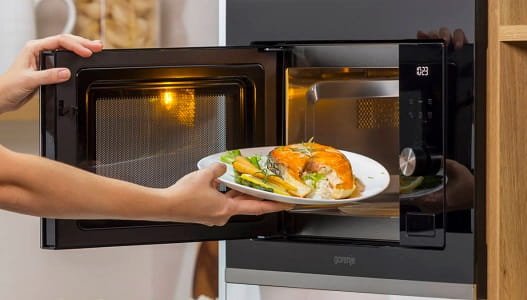
How a Microwave Oven Works
Understanding the basic technology helps evaluate the advantages and disadvantages accurately. A microwave oven uses electromagnetic radiation at a specific frequency — 2.45 gigahertz — to heat food. These microwaves penetrate food and cause water molecules inside the food to vibrate rapidly, generating heat through friction. This is fundamentally different from a conventional oven or gas stove, which heats food from the outside inward. Microwaves heat food from within and throughout simultaneously — which is why reheating in a microwave takes minutes rather than the 15–20 minutes required in a conventional oven.
The radiation involved is non-ionising — it does not alter the molecular structure of food or make it radioactive. It simply causes molecular vibration that generates heat. This distinction is important for addressing common safety concerns.
Advantages of Microwave Ovens
1. Speed and Convenience
The microwave’s most celebrated advantage is pure speed. Reheating a plate of food that would take 15 minutes in a conventional oven takes 2–3 minutes in a microwave. Defrosting frozen meat that requires hours of counter thawing takes 10–15 minutes. Cooking vegetables that need 20 minutes of boiling on a gas stove takes 5–7 minutes. For working professionals, busy parents, and students managing their own meals, this time saving across daily cooking tasks is genuinely transformative. The convenience of pressing a button and having hot food in minutes has made the microwave indispensable to fast-paced modern lifestyles.
2. Energy Efficiency
Microwave ovens use significantly less electricity than conventional ovens for equivalent tasks. A conventional oven consumes 2,000–3,000 watts and requires preheating time — meaning energy is consumed for 15–20 minutes before food even enters the oven. A microwave typically consumes 700–1,200 watts and begins cooking immediately with zero preheating. For tasks like reheating, defrosting, and cooking smaller portions, the energy saving is substantial. Over the course of a year of daily use, this difference reflects meaningfully on electricity bills.
3. Preserves Nutrients Better Than Boiling
Contrary to popular belief, microwave cooking often preserves nutrients better than conventional cooking methods — particularly boiling. Water-soluble vitamins like Vitamin C and B vitamins leach into cooking water when vegetables are boiled. Since microwave cooking uses little or no water and takes far less time, nutrient retention is actually superior for many vegetables. Studies have shown that microwave-cooked broccoli retains more of its antioxidants than boiled broccoli. The combination of short cooking time and minimal water makes the microwave one of the healthier cooking methods from a nutritional standpoint.
4. Safe and Easy to Use
Microwave ovens have relatively simple controls and do not involve open flames, hot coils, or superheated surfaces that cause burns. The exterior of a microwave remains cool during operation. Most modern models include automatic shut-off timers, child lock features, and consistent temperature settings that prevent overcooking. For elderly users, individuals living alone, and children learning to cook under supervision, the microwave’s safety profile is a significant advantage over gas stoves and conventional ovens.
5. Versatility with Convection Models
Basic solo microwave ovens handle reheating, defrosting, and simple cooking. However, convection microwave ovens — which combine microwave technology with a conventional hot air circulation system — dramatically expand the appliance’s capability. A convection microwave can bake cakes, grill chicken, make pizza, roast vegetables, and prepare virtually anything a standalone oven can. For Indian households without a dedicated baking oven, a convection microwave serves as a powerful all-in-one appliance that handles both everyday reheating and serious baking and grilling.
6. Minimal Mess and Easy Cleaning
Since microwave cooking uses lower temperatures and shorter durations than stovetop or oven cooking, food splatters are less common and easier to clean. The interior walls stay cooler, preventing burnt-on food residue. A microwave interior can be thoroughly cleaned with a damp cloth in minutes. Heating a bowl of water with lemon juice for two minutes creates steam that loosens any dried food particles, making deep cleaning effortless. Compare this to cleaning a gas stove with its grates and burner caps, and the microwave’s low-maintenance nature becomes immediately apparent.
7. Compact and Space-Efficient
Microwave ovens are available in sizes that suit even the smallest kitchens. Counter-top models sit neatly on a kitchen shelf without requiring any installation. They require only a standard electrical socket and no gas connection, pipeline, or ventilation infrastructure. For studio apartments, hostel rooms, office pantries, and compact urban kitchens, the microwave’s space efficiency makes it an ideal primary cooking appliance.
Disadvantages of Microwave Ovens
1. Cannot Brown, Crisp, or Char Food
The microwave’s most fundamental limitation is its inability to create the browning and crisping that dry heat produces — the golden crust on baked bread, the caramelisation on roasted vegetables, the charred skin on grilled chicken. This reaction, called the Maillard reaction, requires surface temperatures above 150°C that microwave cooking does not consistently achieve in standard solo models. Food reheated in a microwave often emerges soft and slightly soggy rather than crispy — a significant drawback for Indian foods like samosas, pakoras, and pizza that taste best with a crisp exterior. Convection models partially address this, but pure microwave cooking cannot replicate dry-heat browning.
2. Uneven Heating
Despite heating food from within, microwaves do not always heat food evenly — particularly with larger, denser, or irregularly shaped food items. Cold spots commonly develop in the centre of large portions while the edges overheat. This is why microwave instructions often recommend stirring food midway through cooking or allowing standing time after the microwave stops — to allow heat to distribute through the food. Uneven heating is not just a quality concern; it can also be a food safety issue with items like meat and poultry, where cold spots mean inadequate cooking temperature.
3. Requires Microwave-Safe Cookware
Not all cookware is microwave-safe. Metal vessels and aluminium foil cause dangerous sparking inside a microwave and must never be used. Traditional Indian steel and copper vessels are incompatible. Many plastic containers leach harmful chemicals when microwaved unless specifically labelled microwave-safe. Glass, ceramic, and microwave-safe plastic are the appropriate options — requiring households to maintain a separate set of microwave-compatible vessels alongside their regular cookware.
4. Not Suitable for All Indian Cooking Techniques
Indian cooking’s most flavour-intensive techniques — deep frying, tawa-roasted rotis, tandoor baking, slow-simmered biryanis with dum, direct flame tadka — are not achievable in a microwave. While a microwave can cook dal, rice, and simple curries, the depth of flavour that comes from slow cooking over a gas flame, caramelisation of onions in oil over moderate heat, or the smokiness of a tandoor simply cannot be replicated. For families that cook elaborate traditional meals daily, the microwave is necessarily a supplementary appliance rather than a primary one.
5. Initial Cost and Running Cost
Quality microwave ovens — particularly convection models — represent a significant upfront investment. Reliable solo models start at ₹5,000–₹8,000, while good convection models range from ₹12,000–₹25,000 or more. While the energy savings offset running costs over time, the initial purchase plus the potential need to buy microwave-safe cookware makes the total investment considerable. Additionally, microwave repairs can be expensive, and older models with magnetron failures often cost more to repair than replace.
6. Food Texture and Quality Limitations
Certain foods simply do not reheat or cook well in a microwave, regardless of settings. Bread becomes rubbery. Fried foods lose their crispness. Rice can dry out unevenly. Pasta clumps together. While these are manageable with techniques like covering food with a damp paper towel or adjusting power levels, the quality ceiling for microwave-cooked food — particularly in solo models — is lower than conventional cooking methods for texture-sensitive preparations.
The Verdict — Who Should Buy a Microwave Oven?
A microwave oven is a genuinely valuable kitchen appliance for reheating, defrosting, quick cooking, and — with a convection model — baking and grilling. It is ideal for working professionals, nuclear families, students, and anyone who values speed, convenience, and energy efficiency in daily cooking. A convection microwave is the best single purchase for households that want both microwave convenience and oven capability without a separate appliance.
However, for households that cook elaborate traditional Indian meals from scratch daily, the microwave works best as a supporting appliance alongside a gas stove rather than as a replacement. Used in combination, the two appliances cover virtually every cooking need efficiently — and that is where most modern Indian kitchens find the greatest value.