
The smoothie maker is one of the most lifestyle-aligned kitchen appliances of the wellness era — a compact, dedicated blending machine designed specifically for making smooth, consistent fruit and vegetable beverages quickly and easily. As India’s health-conscious urban population has embraced smoothies, protein shakes, and fruit blends as breakfast and snack options, the smoothie maker has found a growing market in homes where blending is a daily routine rather than an occasional task.
While India’s ubiquitous mixer grinder can technically make smoothies in its liquidiser jar, dedicated smoothie makers offer design advantages — powerful enough motors for ice and frozen fruit, travel bottles that double as blending jars, and quieter operation in some models — that make them genuinely useful for daily smoothie makers. Understanding the full picture of advantages and limitations helps determine whether a dedicated smoothie maker is worth adding to your kitchen.
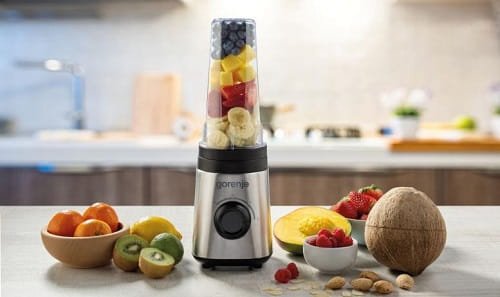
How a Smoothie Maker Works
A smoothie maker consists of a powerful motor base (typically 500–1,000 watts), a blending jar with blade assembly, and often a travel bottle that screws directly onto the blade assembly for portable use. The user places ingredients — fresh fruit, vegetables, curd, milk, protein powder, ice, or frozen fruit — into the jar, locks it onto the motor base, and blends. Some models are “personal blenders” where the serving bottle itself serves as the blending container, eliminating a separate jar.
Advantages of Smoothie Makers
1. Quick, Convenient Daily Smoothies
A smoothie maker produces a complete, smooth beverage in 60–90 seconds — genuinely the fastest breakfast preparation method available. For the morning routine where nutrition and time efficiency are both priorities, a pre-prepared smoothie bag (frozen fruit and vegetables portioned the night before) blended with milk or curd and consumed directly from the travel bottle represents peak nutritional convenience.
2. Personal Blender Design — Blend and Drink from the Same Container
The most practically valuable design innovation in modern smoothie makers is the “blend in the bottle” design — where the travel bottle screws directly onto the motor and blade assembly, blends, and then is detached and used as the drinking vessel. This eliminates washing a separate blending jar, reduces cleanup to rinsing a single container, and makes the entire morning smoothie routine genuinely frictionless.
3. Better for Frozen Fruit and Ice Than Standard Mixer Grinders
Smoothie makers are designed and tested for blending frozen fruit and ice — tasks that can strain and damage standard mixer grinder motors and blades not built for this application. The stronger, more durable blade assemblies in quality smoothie makers handle frozen banana, frozen berries, and ice cubes without the metal-on-ice grinding sound and motor stress that mixer grinders produce.
4. Nutritious Meal Replacement and Health Support
Smoothies made in a smoothie maker provide an excellent vehicle for nutritional density — combining fruit, vegetables, protein (curd, milk, protein powder), healthy fats (nuts, seeds), and functional additions (flaxseed, chia, moringa powder) in a single drinkable meal. For people who struggle to eat adequate fruit and vegetables, a daily smoothie genuinely improves nutritional intake without requiring significant dietary behaviour change.
5. Compact Storage
Personal blender-style smoothie makers are typically 20–25 cm tall and 10–15 cm in diameter — among the most compact powered kitchen appliances available. They store in a small cabinet space and retrieve easily for daily use.
Disadvantages of Smoothie Makers
1. Single-Purpose Application
A smoothie maker is designed primarily for one task — making smoothies and liquid blended beverages. It cannot grind spices, make idli batter, prepare chutneys, or perform the dozens of daily grinding and mixing tasks that a mixer grinder handles. For households where the mixer grinder is already present, the smoothie maker’s utility must justify adding another appliance to the kitchen.
2. Small Capacity Limitations
Personal blender smoothie makers typically accommodate 500–700ml per blend — sufficient for one person but requiring two cycles for a couple. Family-size smoothie preparation requires either a larger dedicated blender or multiple personal blender cycles.
3. Blade Assembly Can Be Fragile
The blade-in-bottle design of personal blenders requires careful handling — the blade assembly screws into the bottle base and is exposed during cleaning. These assemblies are more fragile than the heavy-duty blade assemblies in full-size mixer grinders and can crack the bottle if dropped. Replacement bottles and blade assemblies are available but add to the ongoing cost of the appliance.
4. Cannot Handle Tough Fibrous Ingredients Well
Whole turmeric root, hard beetroot, leafy greens with thick stems, and whole flaxseeds require more power than many consumer smoothie makers provide for complete liquefaction. Budget models with motors below 500 watts produce chunky rather than smooth results with these tougher ingredients — undermining the appliance’s primary promise.
5. Redundant if You Own a Good Mixer Grinder
For most Indian households, a quality 750-watt mixer grinder already handles smoothie-making in its large liquidiser jar effectively. The smoothie maker’s genuine advantage is the blend-and-go travel bottle design and frozen fruit handling — if these specific advantages do not align with your lifestyle, the smoothie maker adds appliance complexity without proportional value.
Verdict
The smoothie maker is excellent for individuals or couples who make daily smoothies as part of a consistent health routine — particularly with the travel bottle design for on-the-go consumption. For families or households where smoothie-making is occasional, the mixer grinder serves the same purpose without requiring an additional appliance.