
When you skip breakfast or eat something nutritionally empty, your blood sugar drops mid-morning, triggering fatigue, difficulty concentrating, and intense hunger that leads to overeating at lunch. Your cortisol — the stress hormone — remains elevated longer without morning nutrition, increasing anxiety and reducing mental clarity. Children who eat nutritious breakfasts consistently perform better academically. Adults who eat breakfast make better food choices throughout the day and are less likely to overeat in the evenings.
A good breakfast needs three components working together: protein to sustain energy and control hunger, complex carbohydrates for steady glucose release, and fibre to support digestion and fullness. Every idea in this guide is designed around this combination.
1. Overnight Oats — 5 Minutes Prep, Zero Morning Effort
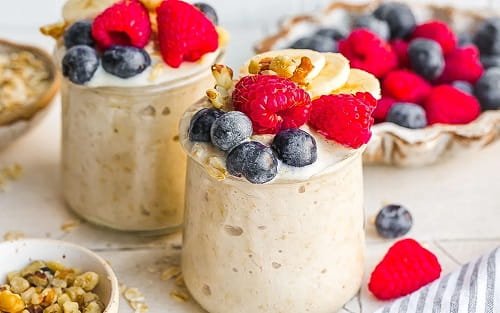
Overnight oats are the ultimate busy person’s breakfast — prepared entirely the night before and ready to eat straight from the refrigerator in the morning. Combine rolled oats with milk or curd, a teaspoon of honey or jaggery, and your choice of toppings — sliced banana, mixed berries, chia seeds, or crushed nuts — in a jar. Seal and refrigerate overnight. By morning, the oats have absorbed the liquid and become creamy, filling, and perfectly edible without any cooking.
Nutritional value — Oats provide beta-glucan fibre that reduces cholesterol and sustains fullness for 3–4 hours. Adding nuts delivers healthy fats and protein. A complete, balanced breakfast in under 5 minutes of evening prep time.
2. Poha — Quick, Light, and Deeply Nutritious
Poha — flattened rice — is one of India’s most beloved and most nutritionally underrated breakfast options. It cooks in under 10 minutes, is light on the stomach, and can be customised endlessly. Rinse poha in water, drain, and temper with mustard seeds, curry leaves, turmeric, green chilli, onions, and peas. Add a squeeze of lemon and fresh coriander before serving. For extra protein, add roasted peanuts or a boiled egg on the side.
Nutritional value — Poha is a good source of iron, particularly when prepared with lemon juice (Vitamin C enhances iron absorption). It is easily digestible, low in calories, and when made with vegetables and peanuts, provides a balanced macronutrient profile.
3. Moong Dal Chilla — Protein-Packed Savoury Crepe
Moong dal chilla is one of the highest-protein Indian breakfasts available — a savoury crepe made from soaked and blended yellow moong dal mixed with ginger, green chilli, cumin, and chopped vegetables. Soak the dal for 20–30 minutes the night before, blend in the morning, and cook like a dosa on a non-stick tawa with minimal oil. Each chilla takes 3–4 minutes to cook.
Nutritional value — Moong dal is one of the best plant protein sources in Indian cooking, delivering approximately 7–8 grams of protein per chilla. Combined with fibre and complex carbohydrates, two chillas with a side of mint chutney make a genuinely complete breakfast.
4. Banana Peanut Butter Toast on Whole Wheat Bread
For those truly pressed for time, this breakfast takes under 3 minutes and delivers excellent nutrition. Toast two slices of whole wheat or multigrain bread, spread a generous tablespoon of natural peanut butter on each, and top with sliced banana. Optional additions include a drizzle of honey or a sprinkle of chia seeds.
Nutritional value — Whole wheat bread provides complex carbohydrates and fibre. Peanut butter delivers protein and healthy fats that slow digestion and prevent mid-morning hunger. Banana adds natural sugars for quick energy alongside potassium for muscle function. A 300-calorie breakfast assembled in 2–3 minutes.
5. Vegetable Upma — Wholesome and Filling
Upma made from semolina (rava) or vermicelli is a classic South Indian breakfast that comes together in 15 minutes and keeps you full until lunch. Roast rava briefly in a dry pan, set aside, and prepare a tempering of mustard seeds, urad dal, curry leaves, ginger, onions, and mixed vegetables. Add hot water in a 1:2 ratio to the rava, stir, cover, and cook for 5 minutes. Garnish with coconut and coriander.
Nutritional value — Rava provides sustained energy through complex carbohydrates. Adding vegetables increases fibre, vitamins, and minerals significantly. Protein can be enhanced by serving with a boiled egg or a small bowl of curd.
6. Greek Yoghurt or Curd with Fruits and Seeds
For no-cook breakfast simplicity, a bowl of thick curd or Greek yoghurt with fresh fruit, a tablespoon of mixed seeds (flax, chia, sunflower), and a drizzle of honey is nutritionally excellent and takes under 2 minutes to assemble. Add a handful of roasted granola for texture and additional complex carbohydrates.
Nutritional value — Curd is an outstanding source of probiotics for gut health, protein for satiety, and calcium for bone health. The combination of protein from curd, natural sugars from fruit, and omega-3 fatty acids from seeds makes this one of the most complete quick breakfasts available.
7. Besan Chilla — Gluten-Free Protein Powerhouse
Similar to moong dal chilla but made from chickpea flour (besan), besan chilla is another high-protein, gluten-free breakfast option that cooks in 10 minutes. Mix besan with water to a smooth batter, add finely chopped onions, tomatoes, green chilli, turmeric, and carom seeds, and cook on a hot tawa. Serve with coriander or tomato chutney.
8. Boiled Eggs with Whole Wheat Toast and Vegetables
Two boiled eggs — prepared the night before and refrigerated — served with whole wheat toast and sliced cucumber or tomato is the simplest high-protein breakfast available. Eggs boiled ahead of time eliminate morning cooking entirely. Add a glass of warm water with lemon to complete the morning nutrition ritual.
Breakfast Prep Tips for Busy Mornings
Spending 20 minutes on Sunday preparing for the week transforms busy mornings. Soak moong dal and besan batter in the refrigerator. Boil a batch of eggs. Prepare overnight oats for three mornings at once. Keep a fruit bowl stocked with bananas and apples. These small preparation investments eliminate morning decision fatigue entirely.
Frequently Asked Questions (FAQs)
Q: Which is the healthiest Indian breakfast for weight loss?
A: Moong dal chilla and besan chilla are the highest-protein, lowest-calorie Indian breakfast options — ideal for weight management.
Q: Can I eat poha every day for breakfast?
A: Yes — poha is nutritious and varied enough for regular consumption, especially when made with vegetables, peanuts, and lemon.
Q: What is the quickest healthy breakfast?
A: Overnight oats (0 morning prep), curd with fruit and seeds (2 minutes), or banana peanut butter toast (3 minutes).
Q: Is upma healthier than idli?
A: Both are healthy — upma has a slightly higher glycaemic index than idli but delivers more fibre when made with vegetables.