
You have probably already googled this procedure four or five times. And each time, you got the same sterile explanation copied across twenty different clinic websites. So let me skip the part where I explain what LASIK stands for and get to what you actually want to know about smartsurf lasik surgery before you commit to it.
SmartSurf and regular LASIK are not the same thing
Your colleague who got LASIK last year? Different procedure. Almost certainly flap-based. A femtosecond laser or microkeratome cut a thin disc into their cornea, the surgeon folded it back like a page in a book, reshaped the tissue underneath, and placed that disc back down. Worked fine for them, probably. Works fine for most people.
But that flap sits on the cornea permanently. It does not fuse back to full strength. Ever. If someone pokes you hard in the eye playing basketball three years later, flap displacement is a real, documented complication. Rare, but real.
SmartSurf does not cut a flap.
SCHWIND built it on their TransPRK platform. One excimer laser removes the surface epithelial cells and reshapes the deeper stromal layer in a single automated sequence. Nothing mechanical touches the eye. No blade, no suction device, nothing. The laser does all of it while a tracker follows your eye movements in real time.
Correction range goes up to about -8 dioptres for myopia. You need sufficient corneal thickness. Your power should have been stable for twelve months minimum. And your eyes need to be free of conditions like keratoconus or significant dry eye disease. Not every patient who wants smartsurf lasik surgery can get it.
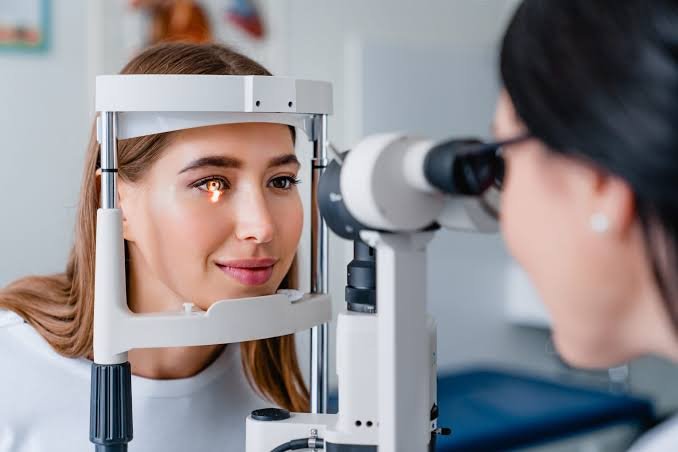
Two hours of testing for a ten-minute surgery
Corneal topography maps the front surface of each eye in thousands of data points. Pachymetry measures thickness at the centre and periphery. Wavefront aberrometry captures optical imperfections beyond simple sphere and cylinder. The surgeon dilates your pupils and examines the retina to rule out lattice degeneration, peripheral holes, anything that could cause trouble during or after treatment.
Tear film gets assessed too. Poor tear quality does not automatically disqualify you, but it changes the post-operative plan and predicts how rough your first week will feel.
All of these readings feed directly into the laser algorithm. Your smartsurf lasik surgery is not a generic programme. The ablation profile is calculated for your cornea specifically, which is why the evaluation cannot be rushed.
One thing clinics bury in the fine print. If you wear contact lenses, you must stop wearing them before the evaluation. Not the day before. Soft lenses need seven to fourteen days off. Rigid lenses need three weeks or more. Contacts warp the corneal surface temporarily. Plenty of patients have shown up for their assessment and been sent home because they wore their contacts two days ago.
Inside the procedure room
You walk in. Lie down on a reclining bed beneath the laser unit. Anaesthetic drops go into both eyes. Takes about sixty seconds to work.
A spring speculum holds your eyelids apart. Feels strange. Does not hurt. You stare at a small green light above you. The surgeon confirms alignment on a monitor and starts the laser. You hear a rapid clicking sound. Thirty seconds or less per eye of actual laser time. Some people report a faint warmth during the ablation. Most say they felt almost nothing.
The surgeon checks both eyes under a slit lamp, places a bandage contact lens on each cornea to protect the surface while the epithelium regrows, and tapes clear plastic shields over your eyes. Entire visit, including prep and the brief post-procedure check, takes about 45 minutes.
Recovery is not overnight and you should plan for that
Flap-based LASIK patients see reasonably well the next morning. SmartSurf patients do not. The epithelium was removed during the procedure and your body has to rebuild it from scratch. That regrowth takes three to five days.
During that window? Your eyes water nonstop. Sunlight feels physically uncomfortable. There is a persistent scratchy sensation like a grain of sand stuck under your eyelid. Reading your phone screen is basically impossible for the first two or three days. Plan to take at least three working days off. Four is better.
The bandage lens comes off around day four or five once the epithelium has closed. Comfort improves quickly after that. Vision is still blurry though. Not alarmingly so, just soft around the edges, like a prescription that is slightly undercorrected.
By ten days to two weeks, most patients can drive in daylight and handle screen work without strain. Full stabilisation takes four to six weeks. Sometimes a bit longer if your original correction was on the higher side.
The slower recovery is the trade-off. What you get in return is a cornea with no permanent flap interface, stronger long-term biomechanics, and lower rates of chronic dry eye compared to flap-based procedures.
Conclusion
Good candidates: moderate myopia within the -8 dioptre range, adequate corneal thickness, patients whose topography shows a regular surface, anyone specifically motivated to avoid flap-related risks. Younger working professionals in their late twenties to mid-thirties make up a growing share of SmartSurf patients in Indian cities, partly because they do not want lifelong activity restrictions tied to a corneal flap.
Poor candidates: high myopia above the correction limit, thin corneas that leave insufficient residual stromal bed, early or suspected keratoconus, unstable refractions. These patients are usually better served by ICL. Implantable collamer lenses correct higher powers without removing any corneal tissue and produce excellent visual quality. It is a different category of procedure, not a lesser one.
The only reliable way to know which group you fall into is a proper pre-operative assessment. Not a five-minute screening at a mall camp. A full evaluation at a clinic where the surgeon performs smartsurf lasik surgery routinely and will tell you honestly if it is not the right fit for your eyes.