
A balanced diet is not a specific list of foods you must eat or avoid — it is a consistent pattern of eating that provides your body with adequate amounts of every macronutrient (protein, carbohydrates, and fat) and micronutrient (vitamins, minerals, and antioxidants) it needs to function optimally. Most people understand that eating well is important but feel confused by the conflicting advice that saturates food media — one week carbohydrates are the enemy, the next week fat is fine and protein is everything. This confusion leads to either paralysis or extreme dietary swings that are unsustainable.
The truth is that creating a balanced diet plan is simpler than the wellness industry makes it seem — particularly for Indians, whose traditional meal structure of dal, rice or roti, sabzi, and curd already approximates a nutritionally balanced plate. This guide gives you a practical, food-inclusive framework for building a balanced diet that fits Indian taste preferences, cultural food traditions, and everyday practicality.
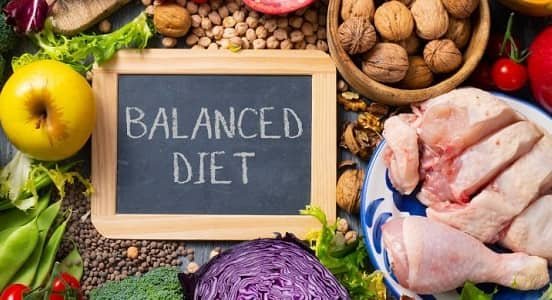
The Three Macronutrients — Your Diet’s Foundation
Every food you eat contains some combination of three macronutrients — and a balanced diet ensures all three are present in appropriate proportions at every meal.
Protein — Essential for muscle building and repair, enzyme production, hormone synthesis, immune function, and satiety. Indian protein sources include dal, rajma, chole, moong sprouts, paneer, curd, eggs, chicken, fish, and soya. Aim for protein at every meal — 20–30 grams per meal for most adults.
Complex Carbohydrates — The body’s preferred energy source — providing glucose for brain function and physical activity. Choose whole grain sources: brown rice, whole wheat roti, oats, millets (jowar, bajra, ragi), and quinoa over refined options. Complex carbohydrates release glucose slowly, preventing blood sugar spikes and sustaining energy.
Healthy Fats — Essential for fat-soluble vitamin absorption, hormone production, brain function, and joint health. Sources include ghee (in traditional small amounts), cold-pressed oils, nuts (walnuts, almonds), seeds (flaxseed, chia), and avocado. Eliminate trans fats (vanaspati, partially hydrogenated oils) entirely.
The Balanced Plate Method
The simplest framework for building balanced meals requires no calorie counting — just a visual plate template:
Half your plate — Vegetables and salad. Non-starchy vegetables provide fibre, vitamins, minerals, antioxidants, and bulk without significant calories. Every meal should include at least one sabzi, salad, or vegetable preparation.
Quarter of your plate — Protein. Dal, paneer, curd, eggs, or lean meat provides the satiety and muscle-supporting nutrition that makes a meal complete.
Quarter of your plate — Complex carbohydrate. Whole wheat roti, brown rice, millet roti, or oats provides the energy base for the meal.
A small portion of healthy fat — A small amount of ghee on roti, a handful of nuts as a side, or cold-pressed oil in cooking provides fat-soluble vitamin absorption and essential fatty acids.
A Sample Beginner’s Daily Balanced Diet Plan
Early Morning (6:30 AM) — 2 glasses of warm water with lemon. Optional: soaked almonds (5–6) and 2 walnuts.
Breakfast (7:30–8:00 AM) — Moong dal chilla (2 pieces) with mint chutney + a glass of warm milk. OR: 2 eggs (any preparation) + whole wheat toast + 1 fruit.
Mid-Morning Snack (10:30 AM) — 1 seasonal fruit + a small cup of curd. OR: a handful of roasted chana.
Lunch (12:30–1:00 PM) — 2 whole wheat rotis + 1 bowl dal + 1 bowl mixed vegetable sabzi + salad (cucumber, tomato, onion) + a bowl of curd. Optionally ½ cup brown rice instead of one roti.
Afternoon Snack (4:00 PM) — Green tea + 4 walnuts or a small piece of dark chocolate (70%+). OR: Chaas (buttermilk) with jeera.
Dinner (7:00–7:30 PM) — 1–2 rotis + 1 bowl sabzi + 1 bowl dal or curd. Keep dinner lighter than lunch.
Post-Dinner — Warm milk with turmeric (if desired). Avoid eating after 8:30–9:00 PM.
Foods to Eat More Of
Whole grains (brown rice, ragi, bajra, jowar), all varieties of dal and legumes, all vegetables (especially leafy greens), all fruits, curd and low-fat dairy, eggs, fish (2–3 times weekly), cold-pressed oils in moderate amounts, nuts and seeds, and herbs and spices (turmeric, ginger, garlic, cumin, coriander).
Foods to Reduce Significantly
Ultra-processed packaged foods (biscuits, namkeen, chips, instant noodles), refined flour (maida) products, sugar-sweetened beverages (cold drinks, packaged juices, excessive sweet chai), fried foods consumed daily, red and processed meats, and excess sodium from packaged foods.
Practical Tips for Beginners
Cook more at home. Restaurant and street food uses excess salt, oil, and refined ingredients. Home cooking gives you complete control over nutritional quality.
Eat the rainbow. Different coloured vegetables and fruits contain different phytonutrients — aiming for 5 different colours weekly ensures nutritional diversity.
Don’t fear any food group. Balanced eating includes carbohydrates, fats, and all food groups. Completely eliminating any group creates nutritional imbalances and makes the diet unsustainable.
Progress over perfection. A diet that is 80% balanced and 20% imperfect is dramatically better than a perfect diet that lasts 2 weeks before abandonment.
Frequently Asked Questions (FAQs)
Q: Is Indian food healthy for a balanced diet?
A: Traditional Indian home cooking — dal, sabzi, roti, curd, and rice — is naturally close to a balanced diet when prepared with whole ingredients.
Q: How many meals should I eat per day?
A: Three main meals with 1–2 small snacks — spaced 3–4 hours apart — is optimal for blood sugar stability and energy management.
Q: Should I take a multivitamin for a balanced diet?
A: A well-constructed whole-food diet provides most nutrients without supplementation. Vitamin D and B12 supplementation may be necessary for many Indians — consult a doctor.