
The robot vacuum cleaner is among the most genuinely transformative home automation products to enter the Indian consumer market in recent years. A compact, disc-shaped autonomous device that navigates your home’s floors independently, cleaning dust, pet hair, and fine debris while you work, sleep, or go about your day — the robot vacuum represents the intersection of artificial intelligence, sensors, and practical home automation in a product that delivers tangible daily time savings.
Once priced exclusively for wealthy households, robot vacuums from brands like iRobot, Roborock, Ecovacs, Dreame, and eufy now span a range from ₹8,000 to ₹70,000+ — creating accessible entry points for middle-class urban Indian households. As India’s apartment culture grows and floor cleanliness standards rise alongside dual-income household time scarcity, the robot vacuum’s value proposition becomes increasingly compelling. This guide examines both sides completely.
How a Robot Vacuum Cleaner Works
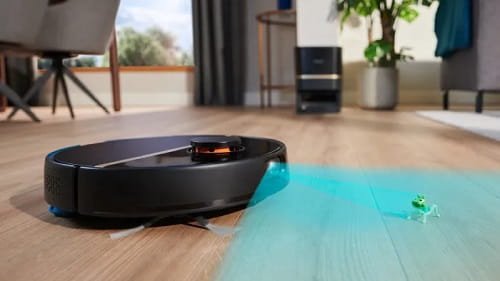
A robot vacuum uses a combination of sensors — infrared cliff sensors (to prevent falling down stairs), bumper sensors (to detect walls and obstacles), and in advanced models, LIDAR (Light Detection and Ranging) or optical sensors for room mapping — to navigate floors autonomously. A small motor powers a central rotating brush and/or edge brushes that sweep debris toward a suction intake. Collected debris is stored in a small dust bin that must be emptied every 1–3 cleaning cycles. Most models connect to a smartphone app for scheduling, room selection, and cleaning history. After cleaning or when the battery is low, the robot automatically returns to its charging dock.
Advantages of Robot Vacuum Cleaners
1. Autonomous Daily Cleaning Without Effort
The robot vacuum’s defining advantage is genuinely impressive — it cleans your floors every day without requiring any active time or effort from you. Schedule it through the app to run every morning at 8 AM while you are at the office, and you return daily to clean floors without having devoted a single minute to cleaning. This daily cleaning frequency — which manual vacuuming or sweeping rarely achieves — maintains a consistently cleaner home environment than any human-powered cleaning routine.
2. Significant Time Saving
Manually vacuuming a 1,000–1,500 sq ft apartment takes 20–40 minutes. Done 5–7 times weekly, this represents 100–280 minutes of weekly domestic labour — 1.5–4.5 hours returned to more valuable activities when a robot vacuum handles the task. For dual-income households, this time recovery is among the most valued aspects of robot vacuum ownership.
3. Reaches Under Furniture — Humans Often Don’t
The robot vacuum’s flat disc profile (7–9 cm height) allows it to clean under sofas, beds, wardrobes, and other furniture where humans rarely clean effectively. Dust accumulation under furniture — a significant indoor allergen reservoir — is continuously addressed by the robot vacuum’s daily coverage of these otherwise inaccessible areas.
4. Excellent for Pet Hair and Daily Dust in Indian Conditions
India’s climate — dust from construction, outdoor particulate, and pollen — creates significant daily floor dirt accumulation that standard weekly sweeping cannot adequately manage. Robot vacuums designed for daily operation excel at maintaining baseline floor cleanliness between deeper cleaning sessions. Households with pets find robot vacuums particularly valuable for managing the constant shedding that manual cleaning struggles to keep pace with.
5. Smart Features in Premium Models
Premium robot vacuums with LIDAR mapping create detailed floor plans of your home — allowing zone-specific cleaning (clean the kitchen but skip the bedroom), virtual no-go boundaries (keep the robot away from a puppy’s feeding area), room-specific cleaning schedules, and detailed cleaning reports. These smart features make premium robot vacuums genuinely intelligent home management tools.
6. Low Maintenance Beyond Emptying the Bin
Beyond regular dust bin emptying (every 1–3 cycles), robot vacuums require relatively minimal maintenance — brush cleaning every 1–2 weeks and filter replacement every 2–3 months. This maintenance load is significantly lower than maintaining a traditional upright vacuum cleaner.
Disadvantages of Robot Vacuum Cleaners
1. Cannot Handle Deep Cleaning
Robot vacuums maintain cleanliness but cannot replace periodic deep cleaning. They do not mop effectively (basic mop-equipped models have limited wet cleaning capability), cannot clean carpets with embedded deep dirt or thick rugs, cannot reach corners with precision, and cannot clean stairs. Deep cleaning of upholstery, walls, kitchen surfaces, and bathroom floors requires conventional cleaning methods. The robot vacuum is a daily maintenance tool, not a complete cleaning solution.
2. Requires Floor Decluttering
Robot vacuums cannot navigate around floor-level obstacles — shoes, bags, toys, charging cables, and other items on the floor must be cleared before each cleaning run for the robot to operate effectively. In Indian households where floor space is actively used — for sitting, storage, and daily activity — the prep work of clearing the floor before robot cleaning can reduce the time-saving benefit significantly.
3. Struggles with Certain Floor Types and Transitions
Robot vacuums designed primarily for Western homes with uniform floor surfaces can struggle with Indian floor realities — thick door thresholds between rooms, high-pile rugs that wheels cannot climb over, small level changes between areas, and bathroom door sills. Mapping accuracy can also deteriorate in homes with complex layouts, multiple small rooms, or reflective surfaces that confuse optical sensors.
4. Noisy Operation in Budget Models
Budget robot vacuums can produce 65–70 decibels of operating noise — comparable to a normal conversation. Running during sleep hours is not comfortable, and running during work-from-home calls can be disruptive. Premium models with noise-reduction technology operate at 58–63 decibels — noticeably quieter and more suitable for active household use.
5. Limited Suction for Heavy Debris
Robot vacuums are optimised for fine dust, hair, and light debris — not for heavy particles, wet spills, large food crumbs, or thick dirt tracked in from outdoors. Significant dirt deposits require conventional broom and vacuum treatment before or after robot cleaning. Indian homes near construction areas or with outdoor space may find the robot vacuum insufficient for the heavier debris loads they encounter.
6. Significant Initial Investment
Quality robot vacuums — with adequate suction, reliable navigation, and durable construction for daily use — start at ₹15,000–₹20,000 for reliable mid-range models. Entry-level models below ₹10,000 typically have unreliable navigation, limited suction, and short product lifespans that represent poor value. Premium models with LIDAR and advanced features cost ₹35,000–₹70,000+.
Verdict
Robot vacuum cleaners deliver genuine value for busy urban households — particularly dual-income families, pet owners, and anyone who values clean floors without the daily time investment of manual sweeping and vacuuming. They work best as daily maintenance tools in homes with relatively clear floors and moderate debris loads, complemented by periodic conventional deep cleaning.