
Rice is India’s most consumed grain — eaten daily by hundreds of millions across every region of the country, from the fragrant basmati of the North to the short-grain varieties of South India. Despite this ubiquity, cooking rice perfectly and consistently — the right texture, the right softness, no burning at the bottom, no overcooking to mush — requires attention and experience on a gas stove. The electric rice cooker solves this problem elegantly, and its growing presence in Indian kitchens across the country reflects how powerfully it addresses one of everyday cooking’s most common frustrations.
Whether you are a student in a hostel room, a working professional in a studio apartment, or a busy parent looking to simplify weeknight cooking, the electric rice cooker offers genuine convenience. However, it occupies counter or storage space, consumes electricity, and adds to kitchen inventory — and for some Indian cooking styles and rice varieties, it has real limitations. This guide covers all the advantages and disadvantages honestly.
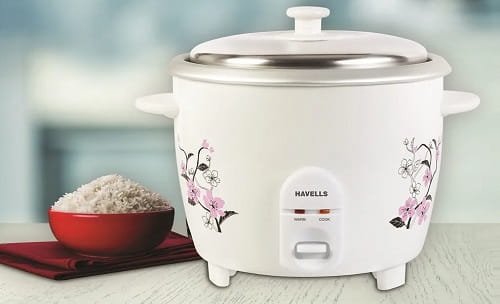
How an Electric Rice Cooker Works
A rice cooker heats a removable inner cooking pot through an electric heating element in its base. The cooker contains a thermostat that monitors the temperature of the cooking pot. When the water in the rice fully evaporates and the pot temperature rises above 100°C — signalling that cooking is complete — the thermostat triggers an automatic switch from “cook” to “warm” mode. This automatic transition is the rice cooker’s defining advantage — it eliminates the need to monitor cooking time and prevents burning.
Advantages of Electric Rice Cookers
1. Perfect, Consistent Rice Every Time
The automatic shut-off mechanism ensures rice is never overcooked, undercooked, or burned regardless of your attention level. Once the correct water-to-rice ratio is established for your preferred rice variety and texture (typically 1:1.5 for white rice, 1:2 for brown rice), the cooker delivers identical results every single time. This consistency is particularly valuable for rice cooking novices and for people managing multiple cooking tasks simultaneously who cannot monitor a stovetop pot.
2. Completely Hands-Free Cooking
Add rice, add water, press the switch — and forget it completely. You can leave the kitchen, attend to other cooking, work, or step away from the home entirely without any risk. The cooker will cook, switch to warm, and hold the rice at serving temperature for up to an hour. This hands-free nature is the rice cooker’s most transformative practical advantage for busy Indian households managing complex meal preparation with multiple dishes on the stove.
3. Keep-Warm Function
The keep-warm function maintains cooked rice at serving temperature for 1–2 hours without drying it out — a genuine convenience for households where family members eat at different times. Rice on the gas stove either goes cold or gets overcooked during waiting periods. The rice cooker eliminates this problem entirely.
4. Energy Efficient
Rice cookers typically consume 400–700 watts — significantly less than gas cooking for the same rice quantity when accounting for the total thermal efficiency of gas burners. They do not heat the kitchen as gas cooking does, which is a comfort advantage in India’s hot climate.
5. Versatile Beyond Rice
Modern rice cookers function as basic steamers — vegetables, momos, dhokla, and idli (in models with steaming trays) can all be cooked above the rice bowl simultaneously. Some models cook oatmeal, khichdi, and soups with equal success. Larger models with additional settings can handle biryani, pulao, and mixed rice dishes.
6. Easy to Clean
Removable non-stick inner pots are easy to wash — rice residue rarely sticks to quality non-stick surfaces. The outer body requires only wiping with a damp cloth. Compared to cleaning a scorched stovetop pan after forgetting rice on the flame, the rice cooker’s cleanup is dramatically simpler.
Disadvantages of Electric Rice Cookers
1. Only Useful for Rice and Limited Steaming
A rice cooker’s core function — cooking rice — is a single-dish application. Unlike a pressure cooker, microwave, or gas stove that can prepare virtually any dish, the rice cooker’s utility is inherently limited. For households eating rice daily, this single function justifies the appliance; for those eating rice occasionally, the space and cost investment may not be warranted.
2. Takes Longer Than Pressure Cooking
Pressure cooking rice on a gas stove takes 8–12 minutes total. A rice cooker takes 20–35 minutes to cook the same quantity. For households accustomed to the speed of pressure cooking — the dominant Indian method — the rice cooker’s longer cooking time may feel frustrating, particularly during rushed weeknight cooking.
3. Cannot Make Authentic Biryani
Layered dum biryani — where rice is partially cooked separately, layered with marinated meat or vegetables, and finished through dum (sealed steam cooking) — requires the specific technique of a dum vessel with precise flame control. A rice cooker cannot replicate this multi-stage, high-fragrance cooking process. It can produce functional mixed rice dishes, but not the specific texture and flavour profile of authentic biryani.
4. Power Dependency
Like all electric appliances, the rice cooker is useless during power cuts — a practical limitation in many Indian cities and towns with unreliable electricity supply. A gas stove and pressure cooker combination remains unaffected by power outages.
5. Occupies Counter or Storage Space
Rice cookers range from compact 0.8-litre models to large 1.8–3 litre family-size units. Even compact models require dedicated storage space — a consideration in compact Indian kitchens where counter and cabinet space is limited.
Verdict
The electric rice cooker is excellent for students, singles, couples, and nuclear families who eat rice daily and value convenience and consistency. It is best positioned as a complementary appliance to a gas stove rather than a replacement — handling rice while the stove handles curries and dal.