
The sandwich maker — also known as a sandwich toaster or toastie press — occupies a small but genuinely useful niche in the Indian kitchen appliance ecosystem. Compact, affordable, and quick, it transforms basic bread and fillings into hot, crispy, perfectly sealed sandwiches in under 5 minutes. For Indian households that have embraced the sandwich as a breakfast and snack staple — from classic bombay masala toast to cheese and vegetable grilled sandwiches — the sandwich maker delivers consistent, convenient results that a plain tawa or oven cannot easily replicate.
Its affordability (quality models start at ₹600–₹800) makes the barrier to ownership extremely low, and its compact size means it stores easily in a kitchen drawer or cabinet. Yet like any specialised appliance, it serves a specific function and has real limitations beyond that function. This comprehensive guide evaluates both sides.
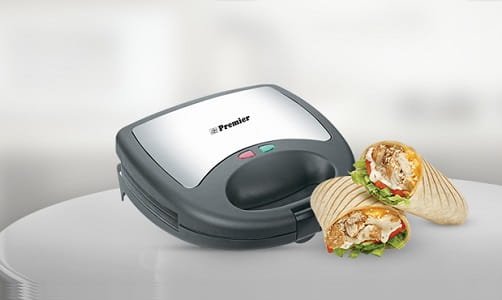
How a Sandwich Maker Works
A sandwich maker consists of two hinged metal plates with non-stick surfaces that heat up when plugged in. The plates are typically patterned — triangular or square — and create characteristic pressed ridges on the sandwich while sealing the edges. Some models have flat grill plates rather than sealed patterned plates — these are called grill sandwich makers and do not seal the edges. When sandwich-filled bread is placed between the hot plates and the lid is closed, the combination of direct heat from both surfaces simultaneously and the mechanical pressure toasts and grills the sandwich faster and more uniformly than any stovetop method.
Advantages of Sandwich Makers
1. Speed — Ready in 3–5 Minutes
A complete hot, grilled sandwich is ready in 3–5 minutes from start to finish — significantly faster than any oven or stovetop method. The dual heating plates cook both sides simultaneously, eliminating the need to flip and cutting cooking time in half. For busy mornings when a nutritious, hot breakfast is needed quickly, the sandwich maker delivers speed that no other cooking method can match for this specific preparation.
2. Extremely Affordable
Quality sandwich makers from reputable brands — Prestige, Philips, Bajaj, Inalsa — are available from ₹600 to ₹2,000 depending on features. This makes the sandwich maker one of the most affordable kitchen appliances available. The price-to-utility ratio is excellent for households that eat sandwiches regularly — the appliance pays for itself in convenience within the first month.
3. Consistent Results Without Skill
Unlike making a toasted sandwich on a tawa — which requires experience to judge butter quantity, heat level, and timing for uniform browning without burning — the sandwich maker delivers consistently even results regardless of the user’s cooking experience. Once filled and placed in the maker, the result is predictably even golden-brown toast every time. This consistency makes it particularly valuable for children learning to make their own breakfast.
4. Compact and Easy to Store
Most sandwich makers are small enough to fit in a kitchen drawer, on a small shelf, or in a compact cabinet space. They require no dedicated counter installation and can be retrieved and stored quickly. This compactness makes them practical even in the smallest Indian kitchens.
5. Minimal Cleanup
Non-stick plates require only a wipe with a damp cloth after cooling — a 30-second cleanup. No pans to scrub, no tawa to clean, no oil splatter to wipe from the stove. The self-contained nature of the appliance keeps mess minimal and cleanup effortless.
6. Versatility Beyond Bread Sandwiches
Sandwich makers can grill paneer tikka pieces, make small pancakes, toast wraps and parathas, and even make small grilled cheese preparations on different bread types. Some users make sweet French toast sandwiches or stuffed roti creations. While bread sandwiches are the primary use, the appliance has more versatility than most buyers initially explore.
Disadvantages of Sandwich Makers
1. Single-Purpose Limitation
A sandwich maker does essentially one thing — makes hot pressed sandwiches. Unlike a tawa that serves dozens of cooking purposes or a microwave that handles virtually any food, the sandwich maker’s utility is narrow. If you do not eat sandwiches regularly, the appliance will quickly become a rarely used drawer occupant.
2. Cannot Make Open Sandwiches or Large Preparations
Sealed sandwich makers require two pieces of bread and work best with fillings that are not too thick — most can accommodate only 1.5–2 cm of filling between bread slices. Open-faced sandwiches, thick club sandwiches, baguettes, or large artisan bread preparations are outside the appliance’s capability. The fixed plate size also limits the bread dimensions — oversized bread slices may not fit or seal properly.
3. Non-Stick Coating Degrades Over Time
The non-stick coating on sandwich maker plates — while excellent when new — tends to degrade with repeated use, particularly if cleaned with abrasive materials or metal utensils. A sandwich maker with degraded non-stick coating becomes frustrating to use, with bread sticking and tearing. Replacement plates are not available for most models — meaning the entire appliance requires replacement when the coating fails, typically after 2–4 years of regular use.
4. Difficult to Clean Thoroughly
While day-to-day cleanup is simple, cheese that melts through gaps, liquid fillings that overflow, or chutneys that drip between the plates can be difficult to clean thoroughly — particularly in the hinge area and plate edges. This cleanup difficulty when fillings overflow makes the sandwich maker less practical for heavily sauced or very moist fillings.
5. Limited to Electricity
Like all electric appliances, the sandwich maker requires a functioning power outlet and is useless during power cuts. A tawa on a gas stove requires neither.
Verdict
The sandwich maker is excellent value for households that eat sandwiches at least 3–4 times per week for breakfast or snacks. Its speed, affordability, and ease of use make it a practical daily-use appliance for students, young couples, and families with children who enjoy grilled sandwiches.