
The egg boiler is one of the most charmingly specialised kitchen appliances available — a small, dedicated device that boils eggs to a precise degree of doneness with minimal effort and consistent results. In a country where eggs are consumed daily by hundreds of millions for breakfast, protein supplementation, and quick snacks, the egg boiler’s promise of perfectly boiled eggs at the press of a button has genuine appeal. Available for as little as ₹400–₹800 for basic models, it is one of the most affordable electric kitchen appliances on the market.
Yet the egg boiler is also among the most frequently questioned appliance purchases — primarily because most people can boil eggs in a stovetop pot without any specialised equipment. Whether the egg boiler’s specific advantages justify its purchase over the traditional method is the central question this guide answers honestly.
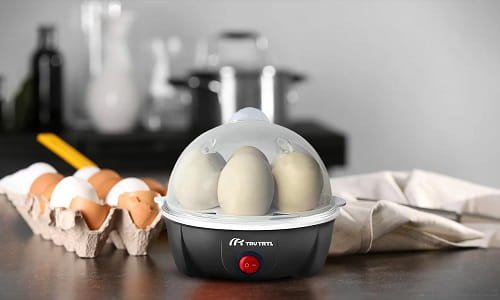
How an Egg Boiler Works
An egg boiler uses a heating plate at its base to vaporise a measured amount of water placed in the base. This steam cooks the eggs placed in a perforated tray above the water. The precise amount of water determines the level of doneness — less water produces soft-boiled eggs (the steam exhausts before fully hard-cooking the whites and yolk), and more water produces hard-boiled eggs. A buzzer or automatic shut-off activates when the water fully evaporates, signalling that cooking is complete. Most models accommodate 4–7 eggs simultaneously.
Advantages of Egg Boilers
1. Consistent Doneness Every Time
The measured-water system of egg boilers produces consistent results every time — the same water quantity in the same egg boiler model always produces the same doneness. For people who struggle to achieve consistently perfect soft-boiled or hard-boiled eggs on a stovetop — where timing varies with egg size, starting water temperature, altitude, and pan size — the egg boiler eliminates all variability and produces exactly the desired result without attention or timing.
2. Completely Hands-Free
Add the measured water, place the eggs, press the button, and walk away completely. The egg boiler requires no monitoring, no timer watching, and no hovering over a boiling pot. It shuts itself off automatically when done. For busy mornings where breakfast preparation must happen in the background while other tasks are managed simultaneously, this hands-free operation is genuinely convenient.
3. No Water Wastage
A stovetop egg boiling pot requires 1–2 litres of water to cover eggs during boiling — most of which is discarded after cooking. An egg boiler uses only 30–80ml of water for steam cooking — a 95%+ reduction in water usage. In urban households conscious of water consumption, this dramatic reduction is a meaningful practical advantage over the course of daily use.
4. Energy Efficient
Egg boilers typically consume only 250–360 watts — among the lowest power consumption of any electric kitchen appliance. The small volume of water being vaporised requires far less energy than heating a large pot of water on a gas burner to boiling point. For daily egg cooking, the energy cost is negligible.
5. Safe for Children and Beginners
An egg boiler involves no open flame, no boiling water exposure, and no hot pan handling — making it significantly safer than stovetop egg boiling for children preparing their own breakfast and beginners navigating kitchen equipment. The enclosed steam-cooking process contains all heat within the unit.
Disadvantages of Egg Boilers
1. Extremely Limited Function
An egg boiler boils eggs — exclusively. This single-function limitation means the appliance serves a utility that can be easily accomplished with existing stovetop equipment. Unlike a pressure cooker or mixer grinder that serves dozens of daily cooking purposes, the egg boiler has no secondary use case whatsoever. Its purchase is only justified if egg boiling is a genuinely daily, high-frequency task where the convenience advantages are regularly realised.
2. Limited Capacity
Standard egg boilers accommodate 4–7 eggs. For large families or households preparing eggs for multiple people simultaneously, this capacity may require multiple cycles or may be insufficient for batch cooking.
3. Inconsistency Across Egg Sizes
The measured-water doneness system works reliably only with consistent egg sizes. If you alternate between small, medium, and large eggs — as is common with farm-fresh eggs where sizing is inconsistent — the same water quantity produces different results. Consistent egg sizing is required for the egg boiler’s precision advantage to function reliably.
4. Requires Careful Cleaning to Prevent Mineral Deposits
Like the electric kettle, the egg boiler’s heating plate builds up calcium and mineral deposits with regular use in hard water areas. These deposits reduce heating efficiency and can cause the buzzer to malfunction. Regular cleaning with a diluted vinegar solution is necessary — a minor but consistent maintenance requirement.
Verdict
The egg boiler is excellent for households where eggs are boiled daily, where consistency of doneness is important, and where the convenience of hands-free operation is valued. At ₹400–₹800, the financial barrier is minimal. If you boil eggs fewer than 3–4 times per week, a small stovetop pot serves the purpose without requiring an additional appliance.