
One of fashion’s most liberating insights is that style is not about conforming to an idealised body shape — it is about understanding how clothing construction, proportion, and silhouette interact with your unique physical proportions to create a visual balance that reads as intentional and confident. The most stylish people are not necessarily those with conventionally admired bodies — they are those who understand their body and dress to flatter it deliberately.
The concept of dressing for body type has sometimes been communicated as a restrictive list of rules about what to hide or minimise — an approach that is both limiting and somewhat outdated in 2026’s more body-positive fashion landscape. A better framework is understanding what creates visual balance and harmony in your specific proportions, and using clothing as a tool for this balance rather than a solution to a problem.
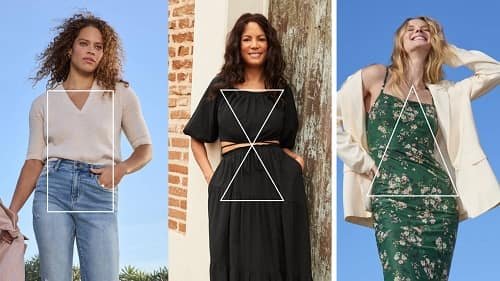
Understanding the Basic Body Type Framework
While every body is unique and exists on a spectrum, the traditional body type classifications — apple, pear, hourglass, rectangle, and inverted triangle — provide a useful starting framework for understanding where your proportions create visual width or narrowness. The goal of dressing for your body type is not disguising your natural shape but creating visual proportion and balance that enhances your confidence and physical presence.
Apple Body Type — Broader Midsection
An apple body type is characterised by a broader midsection with narrower hips and shoulders relative to the waist — weight tends to accumulate around the abdomen and chest.
Dressing strategies — V-necks and open necklines draw the eye upward and create length through the torso. Empire-waist dresses and tops that define just below the bust and then flow freely create proportion without constriction around the midsection. A-line skirts and flared trousers balance the wider upper body with volume at the lower body. Avoid wide belts at the natural waist — they emphasise the widest point. Dark, solid colours through the torso with pattern or colour at the legs create a slimming vertical line.
Pear Body Type — Narrower Shoulders, Wider Hips
Pear-shaped bodies carry width in the hips and thighs with narrower shoulders and chest — a proportional difference that dressing can either minimise or celebrate depending on preference.
Dressing strategies — Adding visual width to the shoulders and upper body creates balance with the wider lower body. Boat necklines, off-shoulder tops, structured blazers with shoulder detail, and horizontal stripes across the chest all add upper-body presence. A-line and flared skirts skim over the hips gracefully. Avoid excessively tapered or tight trousers through the thigh and hip — they can create visual discomfort. Dark colours through the lower body with interesting detail at the upper body is the classic pear-body balancing approach.
Hourglass Body Type — Balanced Bust and Hips with Defined Waist
An hourglass figure has roughly equal bust and hip measurements with a significantly narrower waist — clothing that defines this waist proportion typically flatters this body type most effectively.
Dressing strategies — Wrap dresses and wrap tops define the waist naturally and are universally flattering on hourglass figures. Belted garments, fitted dresses, and clothing with waist-defining seaming celebrate the proportional balance. Avoid boxy, shapeless silhouettes that conceal the waist definition — they work against this body type’s natural advantage. High-waisted trousers and skirts with fitted tops create a classic silhouette that honours the proportions.
Rectangle Body Type — Consistent Width Shoulder to Hip
Rectangle bodies have shoulders, waist, and hips at similar widths with minimal waist definition — creating a straight vertical line rather than curves.
Dressing strategies — Creating the illusion of curves through clothing construction is the dressing goal. Peplum tops and blouses create hip definition. Wrap styles and ruched fabric add dimensional volume. High-contrast outfits — light top, dark bottom or vice versa — create visual breaks that suggest proportion. Wide belts at the natural waist define a waist that the body’s proportions do not naturally emphasise. Asymmetric hems and angled seaming add visual interest and movement that straight silhouettes lack.
Inverted Triangle — Broader Shoulders, Narrower Hips
Inverted triangle bodies have broader shoulders and chest with narrower hips — common among people who are athletic in the upper body.
Dressing strategies — Adding visual volume and width to the lower body creates balance with the broader upper body. Wide-leg trousers, A-line and full skirts, pleated trousers, and palazzos all create lower-body presence. Avoid heavily detailed tops and avoid shoulder pads. Simple, clean upper-body clothing draws less attention to the shoulder width. Darker, less detailed upper halves with more volume and interest in the lower half is the consistent inverted-triangle strategy.
For Indian Dressing Specifically
Traditional Indian garments offer extraordinary flexibility across body types — the saree, with its customisable draping, works beautifully across all body shapes when draped to create the proportions that flatter each figure. Anarkali kurtas, with their fitted bodice and flared hem, are universally flattering. Straight-cut kurtas work best on rectangle and inverted triangle figures. Sharara and flared palazzo sets work beautifully for pear figures.
Frequently Asked Questions (FAQs)
Q: How do I know my body type?
A: Stand in front of a mirror in fitted clothing and compare your shoulder width, waist width, and hip width. The relative proportions of these three points determine your body type.
Q: Is dressing for body type still relevant in 2026?
A: Yes — not as restrictive rules about what to avoid, but as a guide for creating visual proportion and balance that enhances your confidence.
Q: Which body type does a saree suit best?
A: Sarees are genuinely universal — skilled draping can be adapted to flatter every body type. The pleating and pallu arrangement can emphasise waist, add hip volume, or create shoulder width as needed.